
Table of Contents
Wolf Is Built to Be Repaired in Place
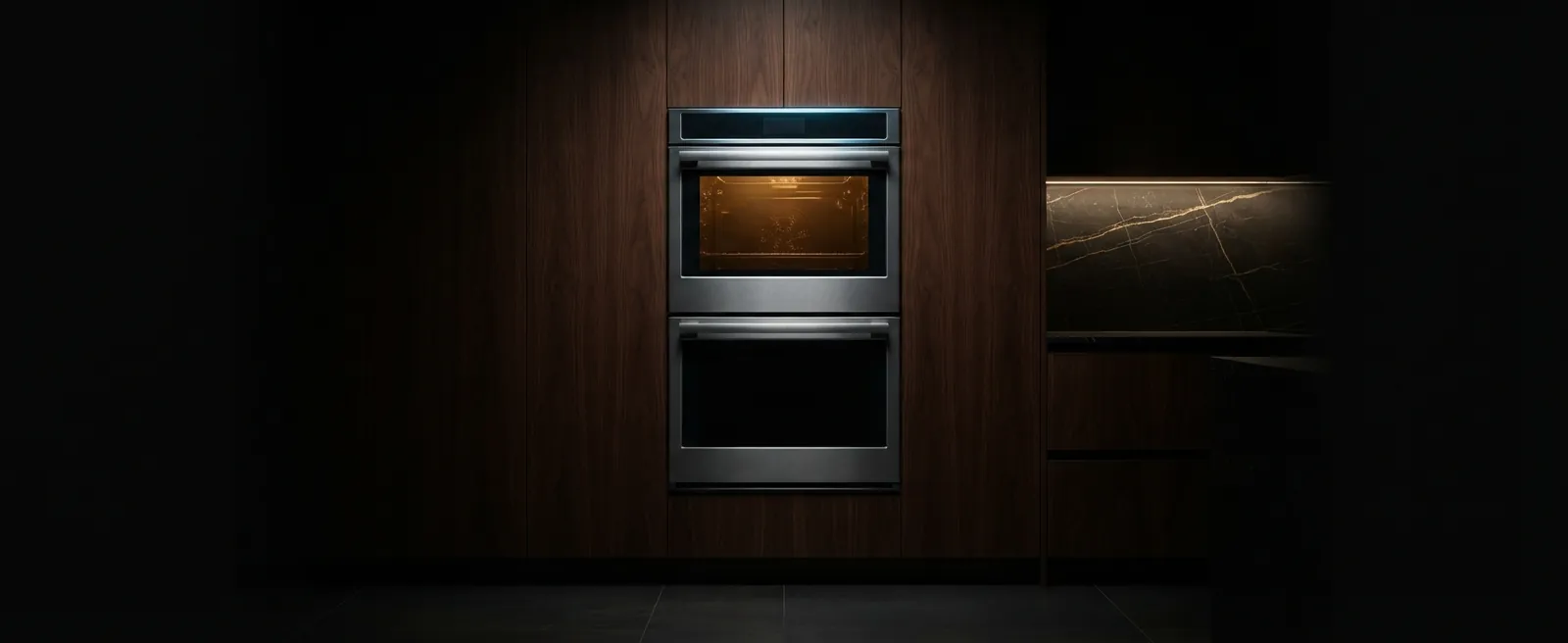
A dual-fuel range combines a commercial-grade gas top with a dual convection electric oven, and both halves are designed to come apart where they stand. Parts remain supported over a long horizon, which is why a fifteen-year-old Wolf is a repair conversation rather than a replacement one.
Wolf repair mostly means restoring specification rather than swapping assemblies: burner performance verified with instruments, oven calibration confirmed with a probe in the cavity, hinges and seals brought back to tension.
Need service? Call (855) 555-0143 or book online.
The Calls We Take Most on Wolf
| What you notice | Where we look first |
|---|---|
| Oven no longer holding calibration | Temperature sensor, then the door seal |
| Sealed burner slow to light | Igniter position and port cleaning before the spark module |
| Induction zone dropping out mid-cook | Cooling fan and power module — usually restricted airflow underneath |
| Griddle or charbroiler not reaching temperature | Its own dedicated burner and thermostat, diagnosed separately |
| Oven door stiff or sagging | Hinge assemblies, which are serviceable parts |
| Convection baking unevenly at correct temperature | Fan speed, rack position, then the seal |
What We Take On
- Dual-fuel, gas and induction ranges
- Professional rangetops with griddle and charbroiler modules
- Induction, gas and electric cooktops
- M Series wall ovens, convection steam ovens and speed ovens
- Ventilation hoods, warming drawers and outdoor grills
What Fails, and Why It Fails Here
Correct temperature, uneven results
The most misleading complaint on this platform. The oven reads right because the sensor is right; the problem is that dual convection depends on airflow, and a fan that has slowed or a gasket that has lost tension produces exactly this. Neither shows on the display.
Modules that are diagnosed separately
A griddle or charbroiler on a rangetop is its own system with its own burner and thermostat. Treating it as part of the cooktop is how the wrong part gets ordered, so we test it on its own terms.
Wolf Parts, Availability and Lead Times
Wolf supports its equipment over a long horizon, including fifteen-year-old ranges. Igniters, sensors, hinge components and seals are readily available; oven control boards, induction modules and griddle assemblies are ordered against the serial number.
Wolf Repair Pricing
Diagnostics are $79, credited to the repair. Most Wolf work runs $349 to $900: igniters, sensors, hinges and seals at the lower end, control boards, induction modules and griddle assemblies at the top. Against a replacement in the thousands, component repair is straightforward value on this equipment.
Why Owners Book Us for Wolf
- Calibration verified with a probe, so the oven holds the number on the dial.
- Burner performance checked with instruments rather than judged by eye.
- Wolf and Sub-Zero-class refrigeration handled on one visit where both are installed.
- Written warranty on parts and labour.
Questions We Are Asked Before Booking
Is a Wolf range worth repairing after fifteen years?
Almost always. Parts remain supported, the range is designed for in-place service, and replacement runs into the thousands before installation.
My Wolf oven reads the right temperature but bakes unevenly. Why?
Once the sensor is confirmed, look at convection fan speed, the door seal and rack position. Dual convection depends on airflow, and a slowing fan produces exactly this symptom.
Do you service the griddle module as well as the burners?
Yes. It is a separate system with its own burner and thermostat, and we diagnose it on its own terms rather than as part of the cooktop.
Can you convert a Wolf range to propane?
Yes, with the manufacturer kit for your exact model — orifices, regulator and a verified flame. We will not convert with generic parts.