



Table of Contents
Liebherr Builds Refrigeration and Nothing Else
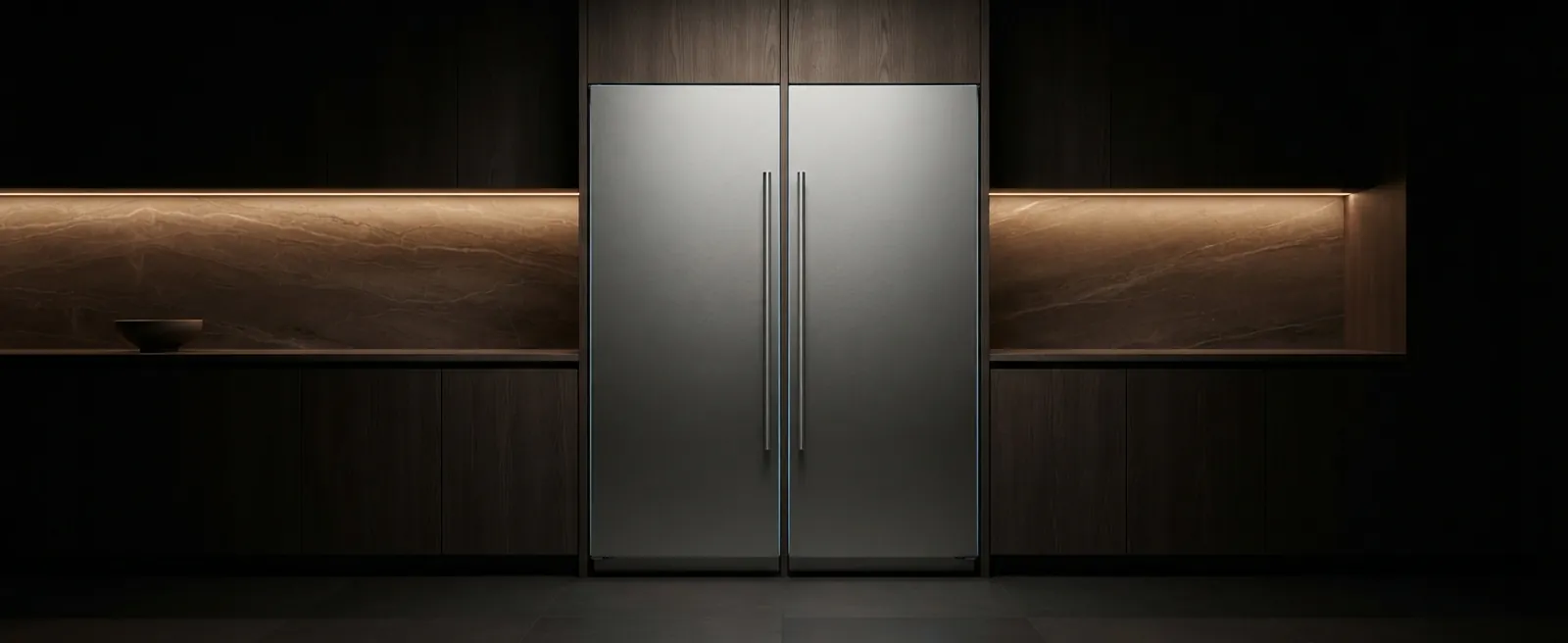
No ranges, no laundry, no dishwashers — just cooling, and the engineering shows it. BioFresh compartments hold their own humidity and temperature independently of the main cabinet, Monolith columns disappear into joinery, and the wine cabinets are genuinely climate-controlled rather than merely cold.
That focus makes Liebherr repair cleaner to diagnose and harder to reach. An integrated cabinet is built into the carcass and its condenser sits where nobody looks, which is why a large share of our Liebherr visits end with a proper condenser service rather than a part.
Need service? Call (855) 555-0143 or book online.
The Calls We Take Most on Liebherr
| What you notice | Where we look first |
|---|---|
| Temperature creeping up over weeks | Condenser fouled behind the plinth or grille |
| BioFresh drawer freezing its contents | Compartment sensor or the damper feeding it |
| Frost returning in the NoFrost section | Defrost heater or sensor; on integrated units, door seal tension |
| Wine cabinet zones drifting apart | Zone sensors and the divider damper — not the compressor |
| Fault code on the display | Read against the service manual; Liebherr codes are specific and honest |
| Door not closing squarely after cabinetry work | Hinge adjustment and panel weight compensation |
What We Take On
- Monolith and integrated refrigerator and freezer columns
- BioFresh and BioFresh-Plus compartments
- NoFrost freezers, freestanding and built-in
- Wine climate and multi-temperature cabinets
- Undercounter refrigeration and freezer drawers
What Fails, and Why It Fails Here
The condenser nobody can see
Integrated cabinets draw air through a restricted path behind the plinth. Dust and pet hair build there quietly, efficiency drops for months, and the first visible symptom is a temperature that will not come back down in the afternoon. Cleaned annually, the same cabinet holds its numbers for decades.
Sensors before sealed systems
BioFresh runs close to freezing by design, so a sensor drifting by a degree is immediately visible in the drawer. It reads like a serious refrigeration fault and is usually a cheap component. We verify with a probe in the compartment before anything else is discussed.
Liebherr Parts, Availability and Lead Times
Parts come through the North American distribution network, typically within two to five business days. Older integrated models can run longer, and we confirm availability and lead time at the diagnosis rather than after you have approved the work.
Liebherr Repair Pricing
Diagnostics are $79, credited to the repair. Most Liebherr work lands between $299 and $720: condenser servicing, sensors, dampers and seals at the lower end; control boards and integrated access toward the top. Sealed-system repairs are quoted separately, and on cabinets of this class they are far more often worth doing than on a domestic refrigerator.
Why Owners Book Us for Liebherr
- Condenser serviced as part of the visit — on integrated Liebherr it is frequently the whole repair.
- Temperature verified with a probe, not read off the display that may be the fault.
- Joinery and custom panels removed properly, with the time in the quote.
- Written warranty on parts and labour.
Questions We Are Asked Before Booking
How often does an integrated Liebherr need its condenser cleaned?
Annually, and more often in a home with pets. Integrated cabinets pull air through a restricted path, so they lose efficiency quietly long before a temperature fault appears.
My BioFresh drawer is freezing the vegetables. Is that normal?
No, but it is usually cheap. The compartment is designed to run just above freezing, so a sensor or damper drifting slightly pushes it over. We measure the drawer before ordering anything.
Are Liebherr parts hard to get in the Chicago area?
Not for anything from the last decade — two to five business days is typical. Older integrated models are where availability thins, and we check before quoting.
Is a fifteen-year-old Liebherr wine cabinet worth repairing?
Almost always. The usual failures are sensors, dampers, fans and seals, and they are modest against a replacement that runs into thousands.